
Why I Write Historical Fiction
Blog post description.
BOOKS
3/19/20262 min read
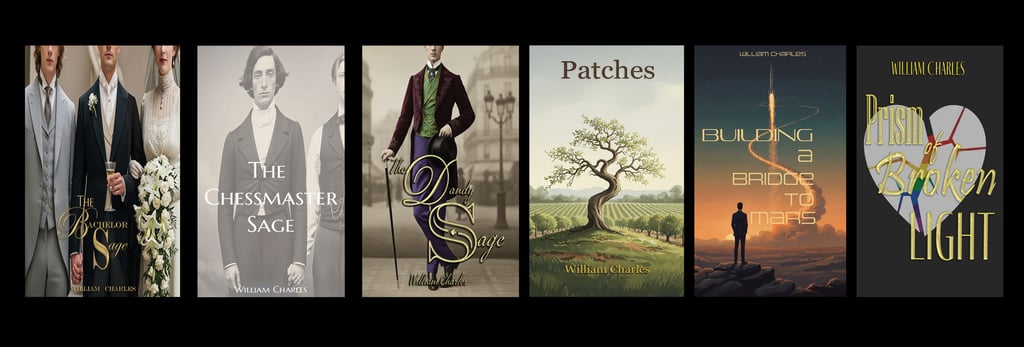
I have always gravitated naturally toward historical settings. Even if I were not writing LGBTQ-centered stories, I suspect I would still be drawn to the past. There is something endlessly compelling to me about stepping into another era and examing how people lived, what they feared, what they desired, and what they were forced to hide. History gives fiction texture, tension, and emotional depth. It reminds us that people have always loved, struggled, sacrificed, and survived, even when the world around them made those things dangerous.
What especially fascinates me is the way queer people existed in so many past eras: often in the shadows of society, yet also as an open secret in many ways. That contradiction feels deeply human to me. LGBTQ people were frequently visible and invisible at once. They built lives, relationships, and communities under the constant pressure of judgment, secrecy, and risk. In many cases, they faced not only rejection, but real danger, prosecution, and violence simply for being who they were. That reality gives historical queer storytelling a particular urgency.
I am drawn to the emotional and social complexity of those lives. What did love look like when it had to be coded? What did courage look like when survival depended on silence, performance, or reinvention? How did people find one another in worlds designed to deny them legitimacy? These are the questions that keep pulling me back. Historical fiction allows me to explore not only oppression, but also resilience, intimacy, wit, longing, and the quiet acts of defiance that made queer survival possible.
The periods I write in reflect that interest. I return again and again to the turn of the twentieth century and the Edwardian era, to Prohibition America, to the Holocaust, to the Space-Age McCarthy years, and to the AIDS crisis of the 1980s. Each of these periods carries its own social codes, dangers, and contradictions. Each offers a different lens on what it meant to live outside the boundaries of what society accepted. These settings are not just decorative backdrops. They shape the stakes of every relationship, every choice, and every act of self-discovery.
For me, writing historical queer fiction is about more than revisiting the past. It is about honoring lives that were too often erased, simplified, or misunderstood. It is about telling stories of love and survival in times that were harrowing, beautiful, cruel, and transformative. I want my fiction to capture both the peril and the humanity of those eras.
The past may be distant, but the emotional truths within it still feel immediate.
That is why I keep returning there.
xoxo William
Contact
Newsletter
william@williamcharlesauthor.com
© 2024. All rights reserved.
Follow me!